Writer : Abhishek Majumdar Direction : Lhakpa Tsering and Harald Fuhrmann Cast : Tenzin Pema, Pema Tsamchoe, Lodoe Sangmo, Lhakpa Tsering, Tenzin Ngawang, Tenzin Phuntsok, Tenzin Wangchuk, Tenzin Lhundup, Tashi Dhondup Sharzum, and Tenzin Ingsel.
PHAYUL Review
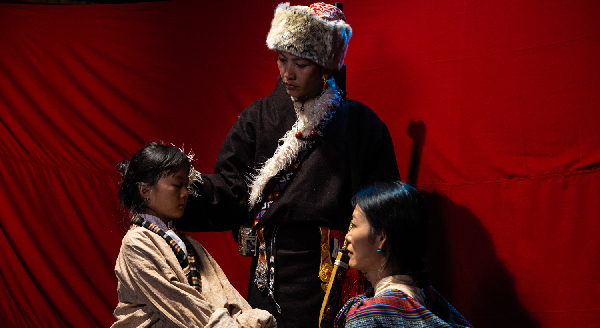
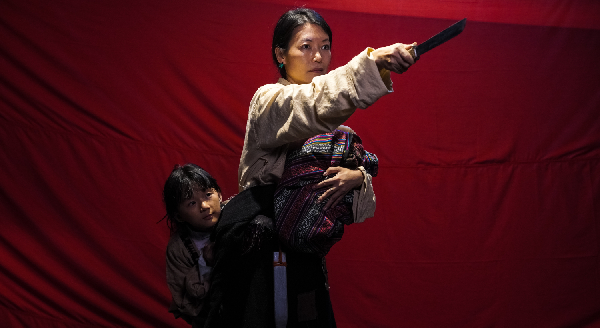
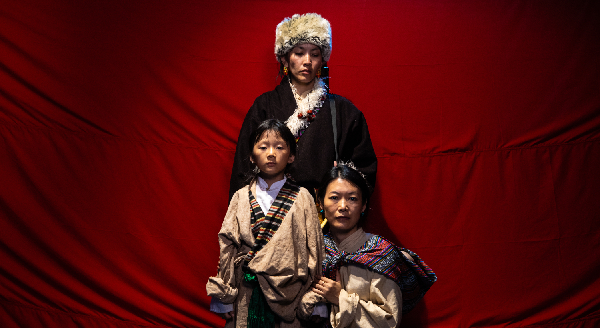
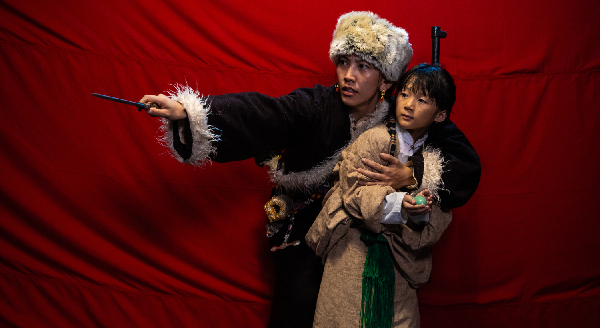
Written by Abhishek Majumdar and co-directed by Tibet Theatre founder Lhakpa Tsering alongside German director Harald (Harry) Fuhrmann, PHAYUL (Homeland) arrives at the Prithvi Theatre Festival with profound historical weight. Serving as a prequel to Majumdar and Tibet Theatre's earlier collaboration PAH-LAK, this 120-minute Tibetan-language production (with English surtitles) travels back to the eastern Kham region in 1956. While standard accounts of the Khampa resistance overwhelmingly center male combatants and political leaders, PHAYUL shifts the historical lens toward Tibetan women-drawing upon oral testimonies to trace how ordinary women navigated occupation, displacement, and survival.
The production's greatest triumphs lie in its sonic soul and visual texture. As Musician, Narrator, and Monk, Tashi Dhondup Sharzum is nothing short of extraordinary; when he sings, his voice carries an unfiltered, ancestral ache that immediately transcends linguistic barriers. Equally striking is the costume design-arguably the finest aesthetic achievement of the production. Rather than treating traditional Tibetan dress as static museum attire, the costumes display remarkable sartorial inventiveness, using layered fabrics, textures, and silhouettes to visually register shifting geographies, seasonal harshness, and emotional rupture.
The acting across the ensemble is grounded, naturalistic, and deeply committed. Pema Tsamchoe brings quiet dignity to Ma Kunsang, while Tenzin Pema (Tashi) and Tenzing Ngawang (Lhakpa) anchor their roles with understated realism. Young child actor Lodoe Sangmo delivers a remarkably poised performance as Tsering. In one of the play's most luminous opening moments, when the child asks what an oppressor is, the mother pauses before offering a devastatingly simple truth: "The person who has lost the ability to love." Moments like this-alongside a rare, piercing line such as "I can't see my children wither like broken flowers on the snow" and a fleeting, provocative reflection on the tensions between violence and Buddhist ethics-reveal the poetic depth the script is capable of reaching.
Yet, precisely because those isolated flashes of poetry and philosophical inquiry are so moving, they highlight where the dramaturgy falls short of its theatrical potential. Much of PHAYUL unfolds in a strictly linear, chronological, and episodic manner that feels closer to a staged historical chronicle-reminiscent of walking through the testimonial galleries of Dharamshala's Tibet Museum-than a fully realized work of dramatic art. The script leans heavily on expository dialogue and would benefit considerably from tighter editing and greater trust in visual, non-verbal storytelling.
To critique the dramatic structure of PHAYUL is in no way to diminish the urgency or sanctity of the Tibetan struggle; rather, it is to ask a fundamental question about theatrical form: Why do we turn to the stage? If a historical testimony conveys the exact same emotional and intellectual impact when read on a page or narrated as an oral archive, the unique alchemy of live theatre remains untapped. The stage exists to elevate text-to translate history into visceral metaphor, spatial tension, and poetic resonance that a history book cannot achieve.
One is reminded of how other contemporary works staged on this very Prithvi floor-such as Annie Zaidi's SO MANY SOCKS illuminated the daily limbo of Tibetan statelessness through lyricism, rhythm, and embodied movement. PHAYUL possesses immense sincerity, a remarkable musical anchor, and an urgent archive of women's voices; with sharper dramaturgical pruning and a bolder embrace of theatrical poetry over linear exposition, it could transform from an important historical document into an unforgettable piece of theatre.
Dr. Omkar Bhatkar is an interdisciplinary artist-scholar, sociologist, and playwright. For over a decade and a half, his work has traversed theatre-making, cinema, poetry, and academic pedagogy in Film Theory and Aesthetics. He is the Artistic Director of Metamorphosis Theatre and Films.