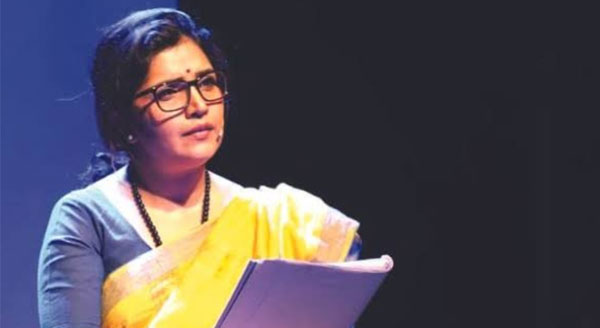
Direction : Amit Vaze Writer : Dr. Sameer Kulkarni Cast : Mukta Barve, Amit Vaze and Manasi Vaze, Jaydeep Vaidya, Ninad Solapurkar and Anjali Marathe
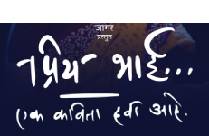
PRIYA BHAI, EK KAVITA HAVI AAHE. Review
PRIYA BHAI, EK KAVITA HAVI AAHE is a dramatic reading generously sprinkled with poetry and song, written by Dr. Sameer Kulkarni and directed by Amit Vaze. The piece has been adapted from a magazine article written by Kulkarni about an experience from his own life back in the 90s.
Kulkarni and some of his colleagues from the hospital brought out a fortnightly publication and for the Independence Day edition, they decided to publish Rabindranath Tagore's poem Where the Mind is Without Fear in as many Indian languages as they could find the translations in, along with the original Bengali version written in Tagore's own handwriting.
After initially searching for such a version without success at a time when access to the internet was not as easily available as it is today, the group realized that they could ask writer, humorist, playwright, and icon of Marathi literature P. L. Deshpande for the original poem. One of the members of the group was his neighbor. And Deshpande's deep knowledge of literature combined with his love for Bengali and ties with Shantiniketan might mean he could find the original version for them. The dramatic reading tells the story of this incident after Pu La (as Deshpande has been fondly called) and his wife Sunitabai indeed agreed to find the poem for them.
For the rest of the performance, Sunitabai - played to perfection by Mukta Barve - and Pu La go through the various books of poetry in their house and reminisce about times past, about the poems they have read and loved and about the importance of poetry in life.
The performance is a celebration of poetry but also a beautiful, melancholy contemplation on ageing and how lovers of poetry can find beauty everywhere around them even as life nears its end.
At one instance Sunitabai quotes poet B. B. Borkar thus: Tapalya Ahet Tara Tovari Gaun Ghe (While these chords are still well tuned, fulfill your desire to sing) Swapna Aahe Lochani Hey, Tovari Pahun Ghe (While you have dreams in your eyes still, see them, realize them)
One imagines these lines as advice a veteran might give to a young artist in the prime of their life, advising them to work on their art, while there is still time; but also, wisdom that perhaps Pu La is trying to impart to a younger generation: to always keep poetry in our lives, because poetry and the beauty of words are what make this world worth living in.
Throughout the performance, we see Pu La only through Sunitabai's responses to what he is saying or when one of the group members narrates what Pu La said when she went to visit him and Sunitabai at their residence. The dramatic reading is first, a tribute to Pu La, and therefore, this move seems like a deliberate decision.
At one point, Pu La is described as the worn pages of a copy of some sacred text. And not actually having an actor read for Pu La compounds the mystique around this legendary figure of Marathi culture: Pu La is indeed sacred, a God in his own right to lovers of literature, he doesn't show himself so easily to his devotees.
One of the songs that returns throughout the performance, (sung beautifully by Anjali Marathe and Jaideep Vaidya with instruments played by Ninad Solapurkar) is Kausalyecha Ram, written by poet G. D. Madgulkar and composed by Pu La himself. The lines go thus:
Kabirache Winto Shele Kausalyecha Ram Bhaabdya Ya Bhaktasathi Dev Kari Kaam Lord Ram weaves a garment for Kabir, indeed God himself is doing the work of this trustful devotee. And so, Pu La is finding the poem for these lovers of poetry.
PRIYA BHAI, EK KAVITA HAVI AAHE brings some beautiful verses into our lives and leaves us wishing wholeheartedly that there were more lovers of poetry in this world.
Neha Shende is an avid theatre-goer and enjoys watching old Bollywood movies in her free time.