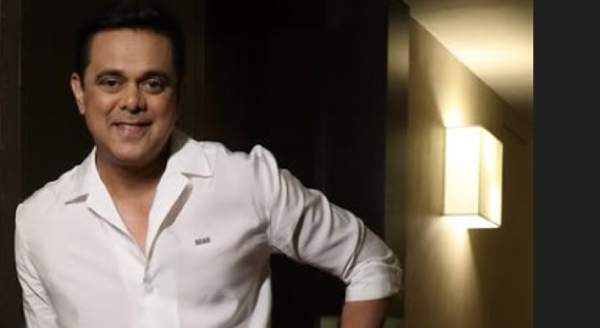
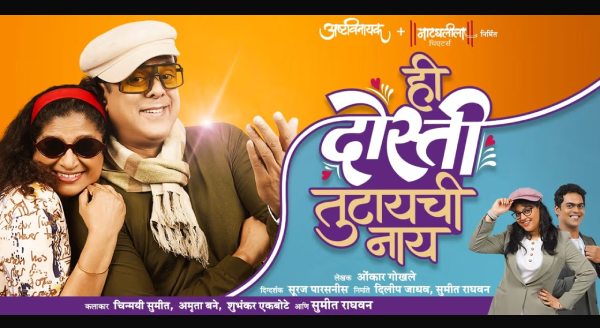
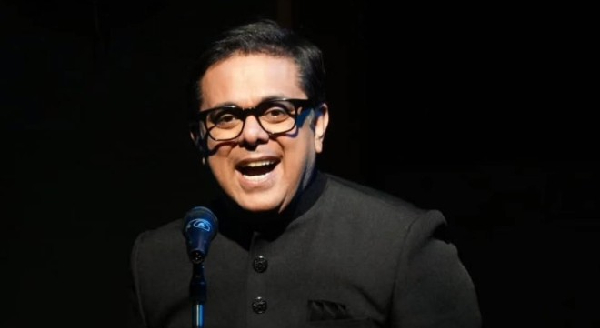
Sumeet Raghavan is well known as the star of comedy TV - from Sarabhai vs. Sarabhai to Wagle Ki Duniya. But the foundation of his acting journey was laid in Marathi theatre in the 80s as a child artist. Raghavan has consistently worked in Marathi theatre ever since and in his latest project – HI DOSTI TUTAYCHI NAAY - he also dons the producer’s hat. In this interview, the actor talks about his experience as a producer, his theory behind good comedy and his theatre journey over the last four decades.
By Neha Shende
With this play you have started out as a producer. What inspired you to do this and how has the experience been?
I always wanted to be a producer. I have plans for producing films and everything else. But I started my career in Marathi theatre in 1986. Forty years ago, I did my first play as a child artist. And since then, on and off, I have been doing theatre. My last play was in 2019. I did two plays: one was KNOCK KNOCK CELEBRITY – it was an experimental, beautifully written play with just two characters – and the other one was HAMLET, which we did in Marathi. It was originally translated from William Shakespeare's classic by Nana Jog in the 1950s. Prashant Dalvi and Anil Deshmukh then adapted the play when we did it. And it was directed by Chandrakant Kulkarni. After that Covid happened and I got busy with Wagle Ki Duniya. After four and a half years, last July, we wrapped up the shoot, and I was looking out for a play. I was reading scripts, Onkar (Gokhale, writer) read this script and I was very excited. I told Chinmayee (actress and wife), "Let's do this play," because we hadn't worked together for 14 long years. We were getting offers, in fact, Chinmayee did ASTITVA just before this with Bharat Jadhav. But we wanted to do something together. This play came up and then we decided to produce it. And that’s how Natyaleela Theatres took birth
But why did you choose to produce it rather than just act in it?
There are things which, as actors, you can't do. You can envisage what you want to do but then there are constraints. We wanted to break that. We thought, "Let us also sit on that side of the table and see how it feels." This play has a lot of set changes, costume changes. There are just four actors, but we all play different roles. We said that just being actors, it becomes difficult for us to push the envelope. At first, Dilip Jadhav (of the production house Ashtavinayak) wasn't ready to produce it because he had his hands full with VIHIN BAI JORAT as that was also in the pipeline. But we really wanted Dilipdada to co-produce it because it's not all that rosy when it comes to dates and management. We needed a veteran, someone who's been around for many years. I persuaded Dilipdada and that's how Ashtavinayak and Natyaleela Theatres came together. Coming back to your question, I always felt like we should give a slightly longer rope to directors. See, we do have budget constraints. Marathi theatre doesn't allow you to go beyond a certain budget – the highest ticket rate is Rs. 500. When we did HAMLET, I knew that it was a huge production. To recover that kind of money with a 500-rupee ticket becomes very difficult. When an actor turns into a producer you don't realize immediately about the logistics costs and how compact the sets must be to keep the play within budget, which I am glad we have managed to do.
There were some things that we edited after the sets were built. We thought, there's no need for this or that, it is too cumbersome. But then we had already spent money. So, we said, "It's okay, let's go ahead." You get wiser as you delve deeper into it. I am now getting a grasp on the situation. You can't be extravagant. You can obviously give a lavish lunch and dinner to everyone, but when it comes to sets and management, you have to be slightly stingy.
You said the production cost for HAMLET was huge. How many shows does it take to break even?
It all depends on the per show cost, which is everybody's payment, theatre rent, newspaper ads, social media cost and transportation. We try to curtail the per show cost. If we do that, then we are home and dry. We don't have to shell anything out of our pocket. Now, it all depends on the box-office and the publicity. By God’s grace, our play is doing well. It has really caught on. It's a feel-good play, people love it. There's not been a single negative comment across the 25 shows that we have done so far. We are doing well. If this trend continues, we shall break in the next few shows.
It's important to bring in fresh talent.
Absolutely, the kind of writing that these guys are doing – there's Prajakt Deshmukh, Onkar Gokhale, Kshitij Patwardhan, Vinod Ratna. And the best part about Marathi theatre is that we've got such a good breeding ground in the ekankika competitions. They are the lifeline of Marathi theatre. That's where all the fresh blood comes into the field from. When I read the script for this play, I felt sometimes there are things in your head, you associate yourself to some ideas and then déjà vu happens and you feel, wasn't I thinking of the same thing?! Okay, let's go with this. That's why it's more about your gut feeling, also it's about how energetic the team is. I am lucky to have Onkar and Suraj (Parasnis, director of HI DOSTI TUTAYCHI NAAY), our son (Neerad Sumeet) has done the background score, even Shubhankar (Ekbote, co-actor) and Amruta (Bane, co-actor), it's a great thing.
I’m glad you mentioned the team, because a script is often only as good as the actors make it. Chemistry is important for a good play. What are the qualities of a good co-actor?
I've been lucky to have had good co-actors all through my career. In theatre, first, you need to know its aesthetics, its discipline, its sanctity and you need a lot of patience. Commuting within Mumbai itself is a huge task. We have to travel to Dombivli, Kalyan, Vashi, even Pune and in the end, maintain the freshness and give your best to the audience. So, I feel theatre requires a different fabric, a different mentality altogether. A good actor needs to imbibe all these qualities in order to put up a good performance.
How did Chinmayee and you decide to do a play together? Why not TV or a film?
Basically, we are both theatre actors. Theatre is our passion. We do TV to run the household, but theatre comes from the heart, theatre is where we actually belong. We did theatre 14 years back and this was like a homecoming. We both fit Manasi and Shashank's characters perfectly. That’s why it was the perfect project to come together. We will only work together if the script demands it and not because we are the producers.
You said preparing for roles in TV and plays is different. How so?
Preparing for roles in TV is not that difficult because you get the time, and the graph of the story changes because of TRPs. So, I feel there is no point in preparing for TV unless it's something like Sarabhai vs. Sarabhai, where everything was watertight. But still I was lucky with Badi Door Se Aaye Hain, Sajan Re Jhoot Mat Bolo or Wagle Ki Duniya. The creative team was very hands-on.
In plays, you start rehearsing, you think this will work. When you perform in front of the audience, you find something new every time. You get a chance to experiment. And that's why there’s a beautiful term in Marathi for "show." Aaj majha prayog aahe- "prayog" means experiment. The experiment can sometimes work and sometimes fall flat.
Sometimes it even happens that you’re sitting backstage, and you think, this is not sounding right. You go back and forth. You regroup, reopen the script – that's why I always carry the script with me. My script is always backstage. Before my scene I always go through it. Sometimes monotony sets in and you tend to skip a few lines. When you go through the script you realize, "Oh, I haven’t spoken this line for a long time, how can I forget this?!" Instead of the original lines, you may have added other frills. Over a period of time, with all the additions, the scene starts to look out of shape and that's why it's important to read the script.
In theatre, you have to be alert. If you are getting laughter, you need to soak in that laughter, it needs to fade out. If you take your next line in the middle of the laughter it turns into a cacophony. Or sometimes you pre-empt something and you pause, you don't get that kind of response and then the scene drags because you have taken that pause. These are very small things but the overall effect can get hampered. I have always been very particular about the sur, be it any medium, even while we are talking right now. It is important to have the right note, set the right tone for every scene. So, that is what is exciting for me. In TV, everything can be managed. Here, once the arrow is shot, it can't be brought back.
You said the writer is the superstar, how does that work in the context of improvisation for you? You do comedy. Do you improvise much?
See, it is my second nature. I always see humor in situations. Even in tragic situations I see dark humor. I like to observe people. I take in their behavior and I store it in my mind, because I can use it somewhere – a walk, a hand gesture – that's what I constantly do. Whenever I’m on stage, I do something and then I think, "Let me also try and say this line," because it comes naturally to me. So, I say it and get a response and I know it worked. I have got a knack for improvisation. I can go extempore but I also know the limit and so I can curb myself where needed. The drunk scene which I do in this play, I found a couple of things which were not in the script. But then you do it and then you find a completion to it on stage itself. You get a response. So that’s how I look at it. It is not structured, it just happens.
You have sung several songs in this play. How’s a musical different from doing a regular play?
I love singing and dancing and doing all kinds of antics on stage. You must have seen reels on social media where I get down in the audience and dance. In this play, in one scene, it is supposed to be our wedding anniversary, and all our family and friends are supposedly seated in front of me. So, I have the opportunity to break the fourth wall. I can go from the stage into the audience. I used to learn singing, but then acting happened and singing took backstage. But yes, the singer within me comes out in such roles.
How did acting happen? You were a child actor. Can you talk about that whole journey?
In the early eighties, summer vacations were on. I was never really into sports. I used to play a little cricket. But I was quite an introvert, so mum and dad put me in this acting workshop, which was run by Sulbha and Arvind Deshpande (veteran theatre and film actor couple). I started going there and liked that space. I did a children's play there – ARRECHCHA! SUTLA KI RAO! – which was a runaway hit. I was doing the main role and that's when I realized, oh, I can also do a little bit of comedy. And from there, Faster Fene happened because Sulbha maushi directed it – my first TV show, a big show. And then it so happened that Dada Godkar (production manager) called me for Rathchakra a TV show by Kamlakar Sarang. That didn't happen, but Dada Godkar said, "Sumeet, would you like to work in theatre?" I said, "Yes I would like to." I was 15-16 years old. That's when my first play happened: MALA BHET HAVI HO by Abhijat – it was one of the renowned theatre institutions of the mid-80s. And from there the ball started rolling and I got into theatre. In '86-'87, I got the Vishesh Lakshyavedhi Bal Kalakar Award of Natyadarpan, which was like the Oscars of Marathi theatre. Then in '89, I got a call from Chandrakant Kulkarni (veteran theatre director) because Prashant Dalvi (noted Marathi playwright) saw me in an inter-collegiate play where he was the judge. He suggested my name to Chandu, Chandu was looking for a boy to cast in the main role. And that's how RANG UMALTYA MANACHE happened. It was, again, a runaway hit produced by Mohan Wagh of Chandralekha. That was in '89. Then, I did another play in '91 called JWALAMUKHI, again by Chandu Kulkarni. Things started rolling. And in JWALAMUKHI, enters Chinmayee, fresh from Pune. That’s when we started dating each other. We did a couple more plays together – PHAKTA EKACH KARAN in '93, BOMBAY MERI JAAN in '94, in '96, we got married.
You started out with strong work in drama, not just comedy. How did you find your niche in comedy, then?
I don't know, I just blossomed there. Because comedy was never on the cards. But then in '97-98, I did a show called Ek Do Teen, which was a rip-off on all the classics. It was directed by Sachin Pilgaonkar. I used to play Dharmendra in all the sketches. We did Chholay, Chipke Chipke, Mera Gown Mera Dress where Dharamji was perpetually wearing a gown and roaming around with a gun. I used to mimic even as a child. There was a cassette by Johny Lever, his first one, Hasee Ke Hungame. I had learnt it by heart. Whenever anyone asked me, I used to start, so yeah. After Ek Do Teen, Sachinji cast me in Hudd Kar Di. It was a social serial with Dara Singh, Rita Bhaduri, Shilpa Tulaskar. I used to play a driver in that. From there, I started doing a bit of comedy. Then, of course, Sarabhai vs. Sarabhai happened in 2003.
There are so many different genres of comedy. Do you have a preference? You often do verbal comedy…
I like to do verbal. But I would also love to do a farce, but there has to be some logic to it. I try to find logic in everything, even comedy, even something outlandish. We used to do a Gujarati play – Dilip Joshi, Amit Mistry and I. We did a show called Shubh Mangal Savadhan on Sahara TV. The producer, Hemal Thakkar said to me, "Let's do a Gujarati play." I said, "I can't speak Gujarati." They said, "We'll make your character Marathi, from Baroda, so that if you stumble somewhere, you can speak in Hindi or Marathi." So, we did 250 shows of that play. In the play, there are these three guys staying in a house. Now the condition is, whoever gets married first will get to stay there with his wife and the other two will have to leave, so what to do? So then, I dress up like a woman. On stage, we used to change clothes, and Amit was a tiny guy. His character also dressed up in woman’s clothing. It was so outlandish. In the scene, the doctor is in the middle. He is the trustee and if he has any doubts, you won’t get any property. So, it's important to convince him. Now I am standing on the left, and the doctor is looking at me. Something happens and then Amit wears my clothes on stage while the doctor is talking to Dilip and the doctor looks suddenly to the right, and he says, "How did the lady become so short?" The director came up with this logic. The lawyer says, "The lady is pregnant, right? So, there's a baby in the stomach. It keeps moving around. Right now, the baby is tired." "Who? The baby?" "Yes" "So then?" "So, it sat down. So, the lady's height reduced." In the end I wear the lady's clothes again and they say, "Oh the baby stood up, is it?" That was so outlandish, but people used to lose it in the auditorium and laugh. We thought this worked! It does have some logic to it, it’s a bit mad, but there’s logic there. So, I like to do that kind of comedy. Then you just need to deliver the punch line with dedication, and it goes and hits the audience and explodes.
Since you are half Tamil and half Kannada, how have you worked primarily in Marathi theatre?
All my childhood friends were Marathi. Also, my mother was Kannadiga, so she spoke some Marathi, since the two states share a border and there's a population that shares languages there. Also, we were staying in Kurla and that's how Marathi seeped in and I am more comfortable in Marathi than in any other language.
What excites you in theatre today? What would you like to see going ahead? Both as a producer and as an actor.
I would like to see good content, which is happening right now. Marathi theatre is at its best right now. Everywhere you look, there are some very good plays, which rarely happens. There are usually one or two plays that are doing well, the others are alright. Right now, it's the other way round – there are 8-9 plays that are really doing well. Now HI DOSTI TUTAYCHI NAAY is doing well. So, there’s a mixed bag for the audience and they are lapping it up. There is fresh blood constantly coming in, fresh ideas, fresh talent, that's happening. So, I feel this is a great time for Marathi theatre and this will continue. This is my first play as producer. I am going to take it easy. Chinmayee and I are fully concentrating our energies on this play. We want to travel everywhere with this play.
*Neha Shende is an avid theatre-goer and enjoys watching old Bollywood movies in her free time.